
I. Introduction
Rising concerns over climate change, driven by fossil fuel use and carbon emissions, affect 85% of the global population and create uncertainties for capital markets, complicating portfolio diversification[1]. These risks highlight the need to integrate environmental, social, and governance (ESG) factors into financial strategies. The long-term solution lies in reducing global greenhouse gas emissions, but the COP28 Summit revealed a lack of commitment from major emitters, increasing global uncertainty (Acheampong et al., 2022). This pressure encourages developed countries to invest in renewable energy technologies, which require energy metals such as lithium and cobalt. However, soaring demand for these metals presents challenges, as mining must increase extraction fivefold by 2050 to meet demand, raising concerns over resource availability and environmental impact[2].
Energy metals play a central role in addressing climate change, yet their extraction and use carry ESG-driven uncertainties that affect both market stability and investment decisions (Cunado et al., 2024). ESG uncertainty affects metal prices through several interconnected channels. It alters investor sentiment and risk perception, thereby influencing capital flows toward metal industries. Regulatory and compliance uncertainty also contributes to cost variability and supply instability, affecting price volatility (Demers et al., 2021). In addition, technological adaptation and green investment decisions respond to changing ESG expectations, while demand for transition-critical metals such as copper, lithium, and nickel remains sensitive to evolving environmental policies and sustainability standards. With the rapid increase in demand for these metals, particularly in sectors like renewable energy and electric vehicles, ESG risks such as shifting regulatory frameworks and environmental impacts complicate the energy transition (Ongan et al., 2025). This study contributes by examining the relationship between ESG uncertainty (ESGUI) and the returns of energy metals critical for emissions reduction. Focusing on metals primarily extracted in the Asia-Pacific region and influenced by U.S. climate policies, the study aims to explore the nonlinearity and predictability of returns within the context of these ESG-driven uncertainties. Understanding these dynamics is crucial to ensuring that energy metals can contribute effectively to climate mitigation while fostering sustainable economic growth.
Traditional commodities like crude oil and agricultural products are primarily influenced by general economic activity and supply–demand imbalances, whereas energy metals exhibit price behaviour that reflects policy-driven demand shocks and structural shifts associated with the low-carbon transition (Reboredo et al., 2024). Previous studies have explored the hedging potential of green assets against climate risks and other markets, highlighting a stronger hedging capability in green bonds (Gu et al., 2023; Hu & Borjigin, 2024). Similarly, Sheng et al. (2022) investigated the influence of climate risks on the coincident indicators of 50 US states, finding a negative relationship between climate risk and economic activity. In the case of energy metals, Siddique et al. (2023) and Albulescu et al. (2019) examined the hedging potential between energy metals and clean energy stocks, reporting no significant hedging benefit for energy metals in relation to clean energy stocks. While various studies have examined the impact of different types of uncertainty on energy metals, the relationship between energy metals and ESG-driven sustainability uncertainty remains unexplored. This gap in the literature is addressed by the current study, which aims to investigate the impact of ESG-driven sustainability uncertainty on energy metals.
The growing uncertainty surrounding ESG issues, including policy and regulatory changes, influences investment trends for energy metals and their role in mitigating climate change. Using Rolling Windows Wavelet Quantile Granger Causality (RWWQGC), the study captures the nonlinearity and distributional characteristics that influence the relationship between ESGUI and energy metals, highlighting their diversification and safe-haven potential. This methodology provides insights into how interactions evolve across time scales and quantiles, revealing both short- and long-term effects of ESGUI risks on energy metal markets. The study offers novel empirical evidence on the relationship between ESGUI and energy metals, with significant implications for sustainable energy metal use and investment.
This study is organized as follows: Section II outlines the data and methodology, Section III presents the empirical results, and Section IV concludes with key policy recommendations.
II. Data and Methodology
A. Data
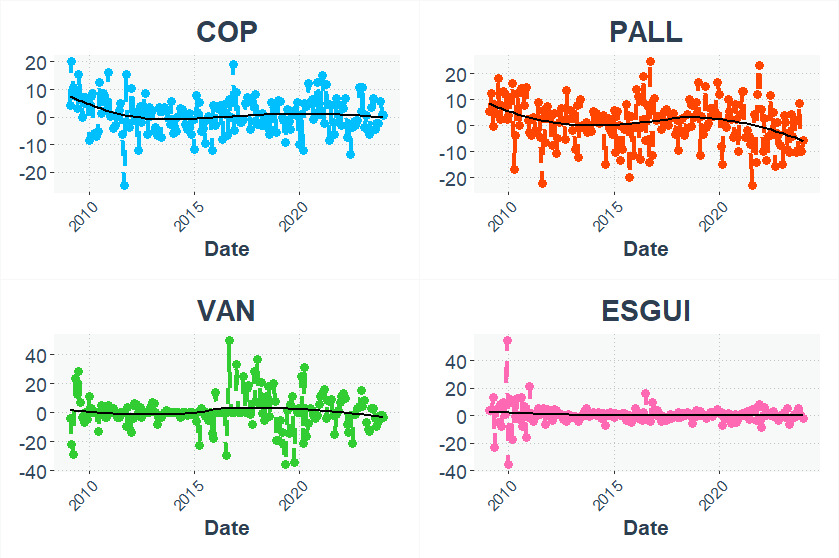
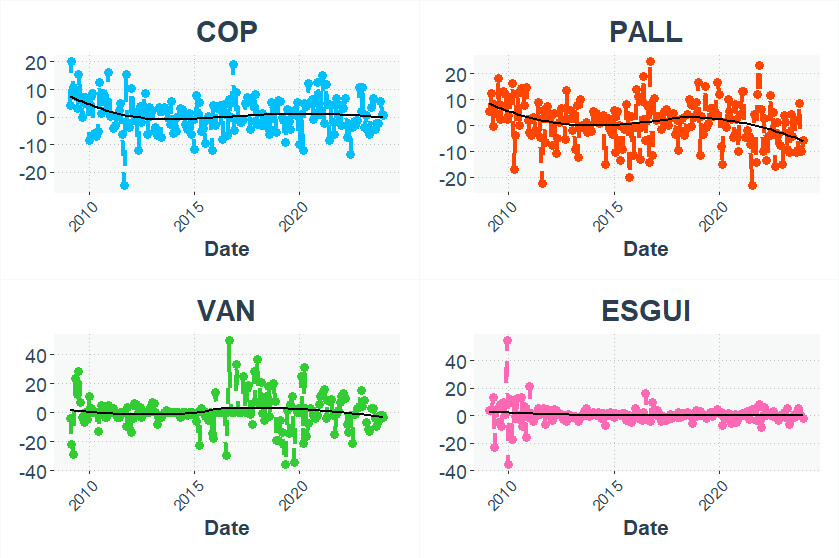
This study examines how energy metals react to sustainability uncertainty (ESGUI) using data from 2009M11 to 2024M8. The sample period is chosen because consistent ESGUI uncertainty and metal market data are available only from 2009 onward, and extending to 2024 ensures the inclusion of the most recent and reliable observations. The data for energy metals are gathered from https://www.investing.com, namely Copper (COP), Palladium (PALL), and Vanadium (VAN). The data for ESGUI[3] is obtained from https://www.policyuncertainty.com/sustainability_index.html, which constitutes a composite measure capturing policy-related and communication-based uncertainty surrounding environmental, social, and governance issues. The study transforms the series into percentage returns, with the trends of the variables illustrated in Figure 1.
B. Methodology
This paper applies the Rolling Windows Wavelet Quantile Granger Causality (RWWQGC) approach to examine causal linkages jointly across time, frequency, and quantiles. Building on Granger (1969), subsequent methods have extended causality testing to time-varying, quantile-based, frequency-based, and hybrid frameworks. However, these techniques do not fully integrate all three dimensions simultaneously. RWWQGC addresses this gap by providing a unified framework for multi-scale, distribution-sensitive, and time-evolving causality analysis. The RWWQGC method is defined as follows:
RWWQGC(ESGUI→Ri)=aw,x,τ+B∑b=1δbdx[Rτi]t−b+B∑b=1γbdx[ESGUIτ]t−b+uw,x,τ
where depicts the percentage returns of the -th energy metals; overlapping rolling windows are depicted by level of decomposition is denoted by and depicts quantiles, and lag length, stands.
III. Main Findings
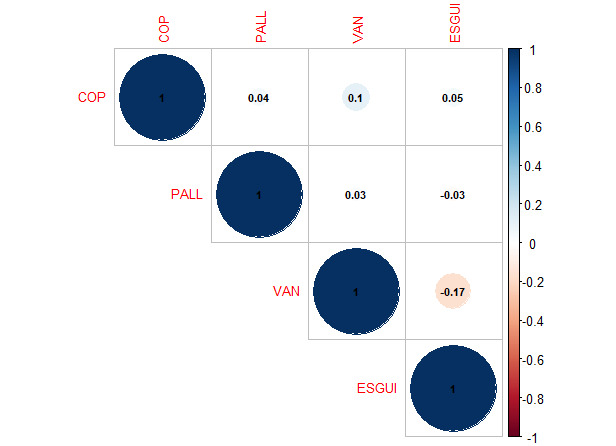
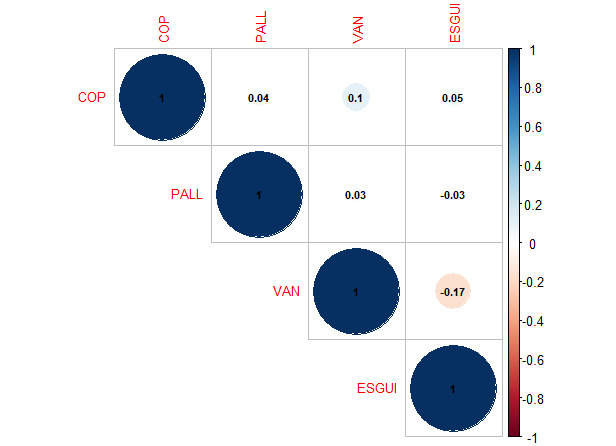
Figure 2 indicates that ESGUI is only weakly correlated with the energy metals. It shows a very small positive correlation with COP, a slight negative correlation with PALL, and the strongest, though still modest, negative correlation with VAN.
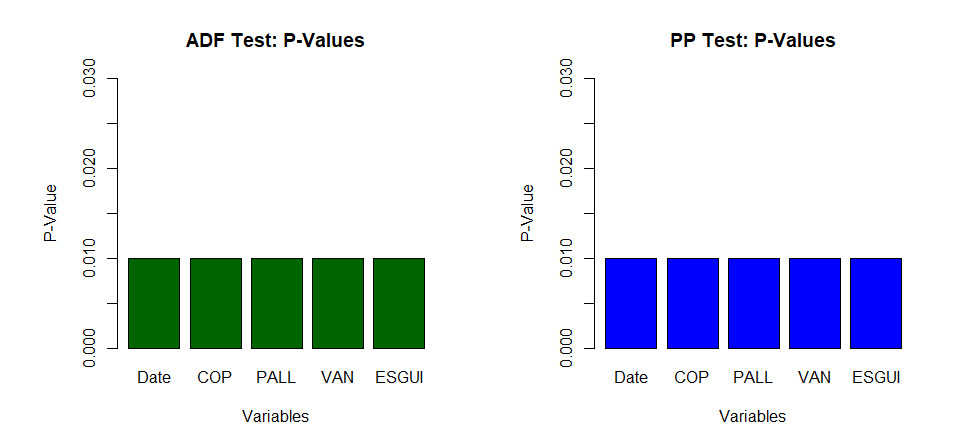
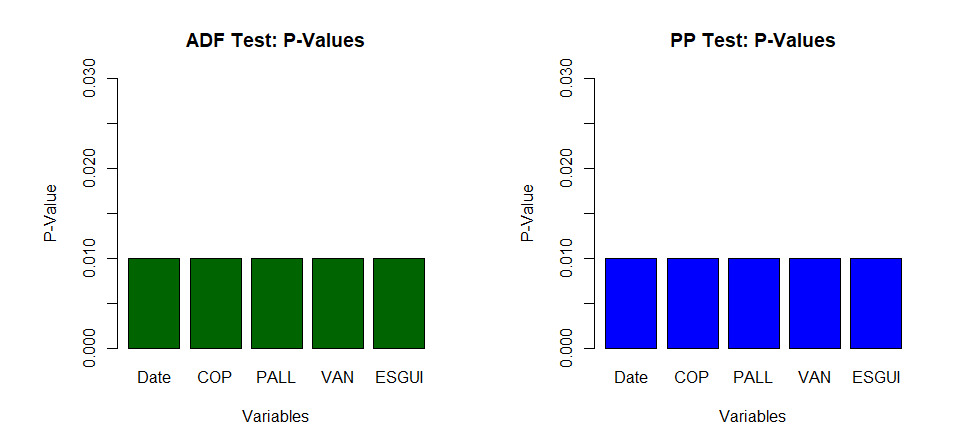
The study examines stationarity using ADF and PP tests. Figure 3 shows very low p-values for all variables, providing strong evidence against the null hypothesis of non-stationarity. This suggests that the variables are stationary, as both tests reject the null hypothesis.
Table 1 presents the BDS test results for various M-values (M2 to M6) across COP, PALL, VAN, and ESGUI. The test statistics for VAN and ESGUI are highly significant, rejecting the null hypothesis of no dependence, indicating significant nonlinear dynamics. In contrast, COP and PALL show no significant rejection of the null hypothesis.
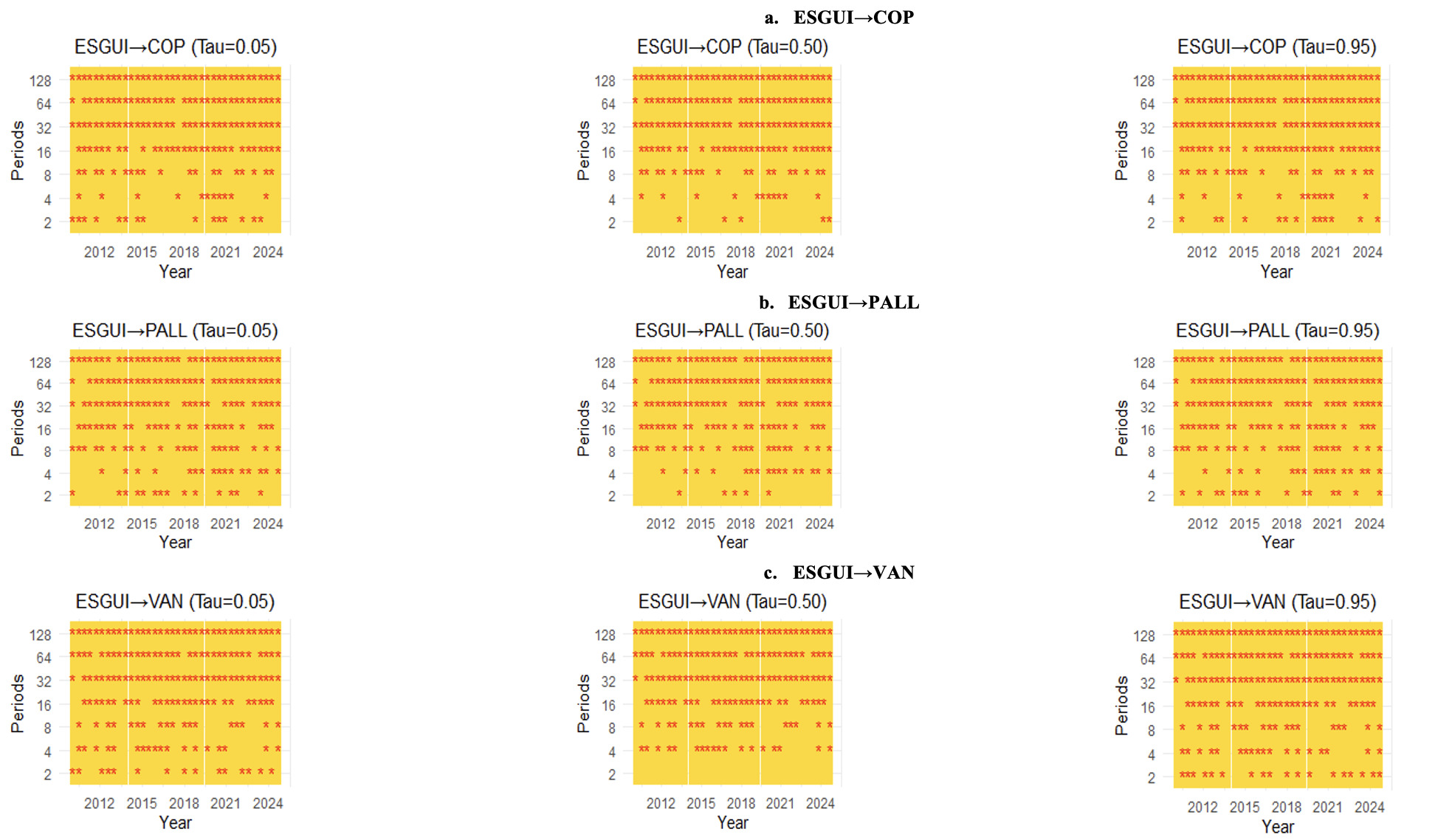
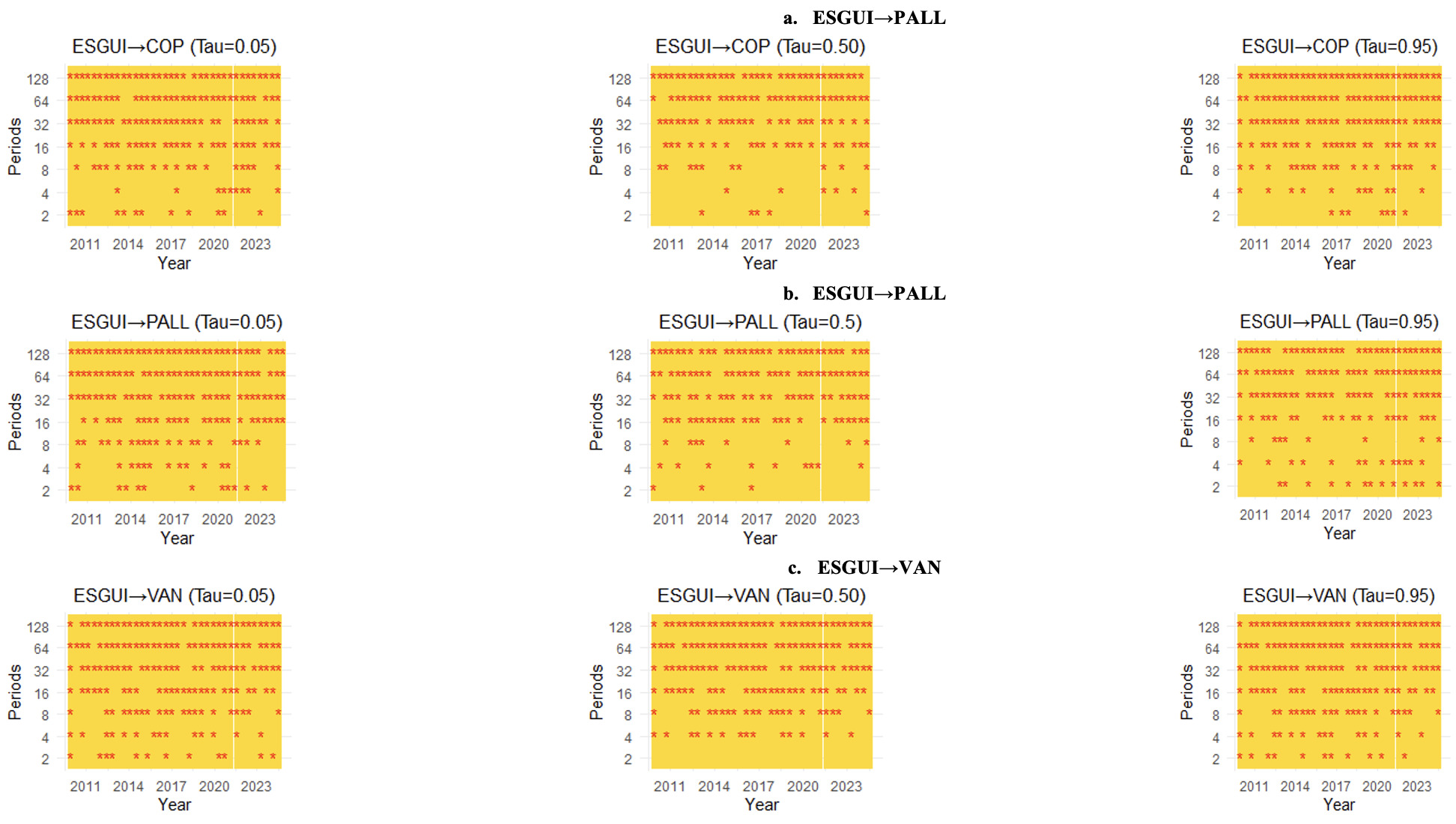
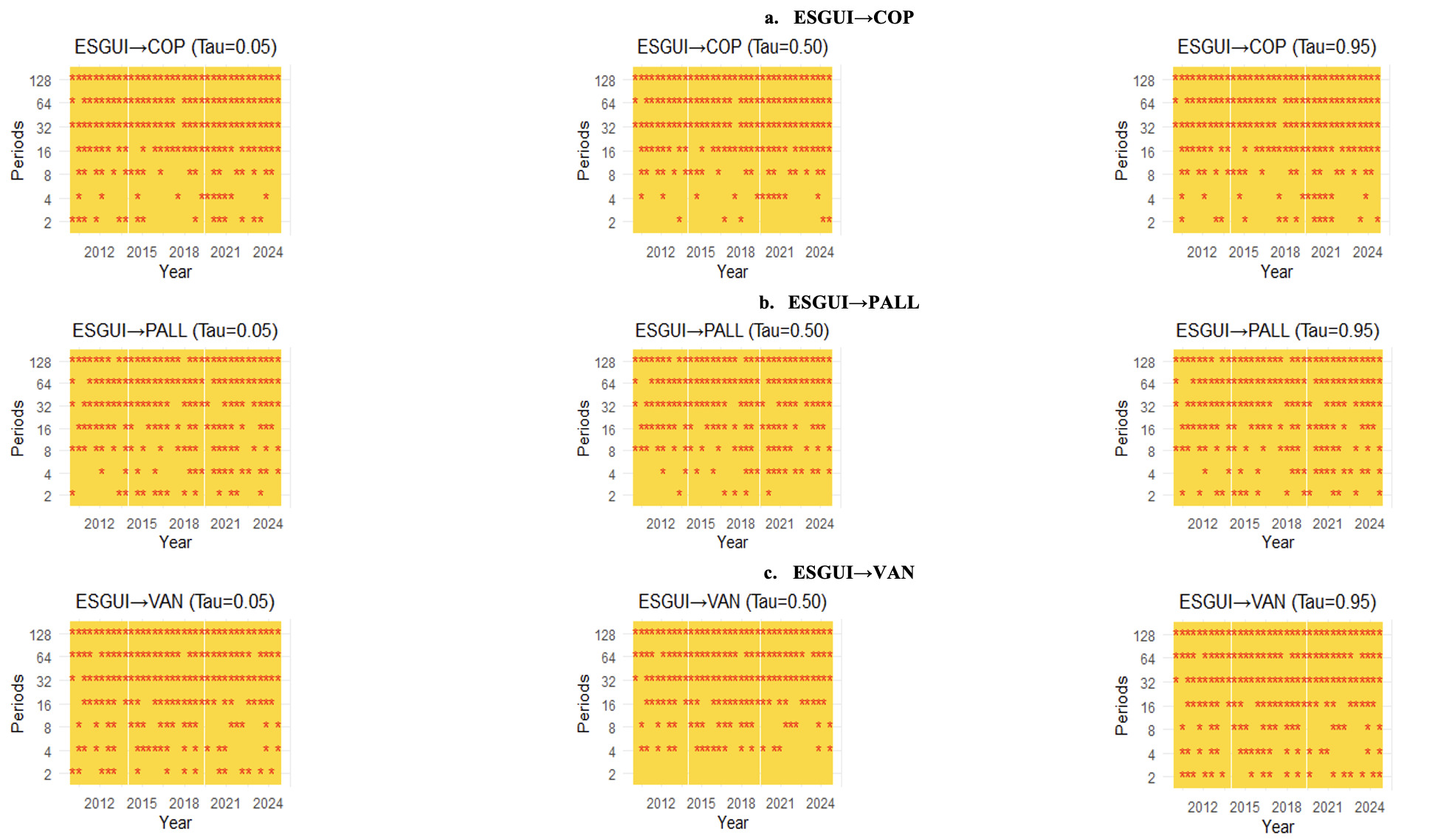
Next, we analyse the causal effect of ESGUI on energy metals using the RWWQGC approach. Figure 4 shows the results of the RWWQGC[4] using a window size of 12 months. In Panel A, ESGUI significantly predicts COP across several quantiles and time horizons, with the strongest effects at the median and upper tail (0.50 and 0.95). This pattern suggests that when ESG-related risks intensify, often alongside stronger commodity demand, copper prices become more sensitive to sustainability and policy signals. However, causality is weaker and less frequent at the lower tail (0.05), implying that in downturns, copper dynamics are driven more by fundamentals than ESG concerns. These results are consistent with Batten et al. (2024), who argue that uncertainty can magnify commodity price responses during favourable market regimes.
Panel B shows a more persistent relationship for PALL, where ESGUI exhibits strong and sustained causality at 0.50 and 0.95, particularly from 2012 to 2024. Palladium’s role in emissions-related technologies and automotive supply chains may heighten its exposure to ESG policy shifts. However, as with COP, the effect weakens in bearish states (0.05).
Panel C reveals similar regime dependence for VAN. ESGUI’s predictive power is strongest at higher quantiles (0.50 and 0.95), reflecting vanadium’s relevance for steel and battery technologies during demand upswings, while the link fades at 0.05. Overall, ESGUI matters most in normal to bullish regimes and least in bearish markets, echoing Gao et al. (2024), Karim et al. (2023), and Xing et al. (2024).
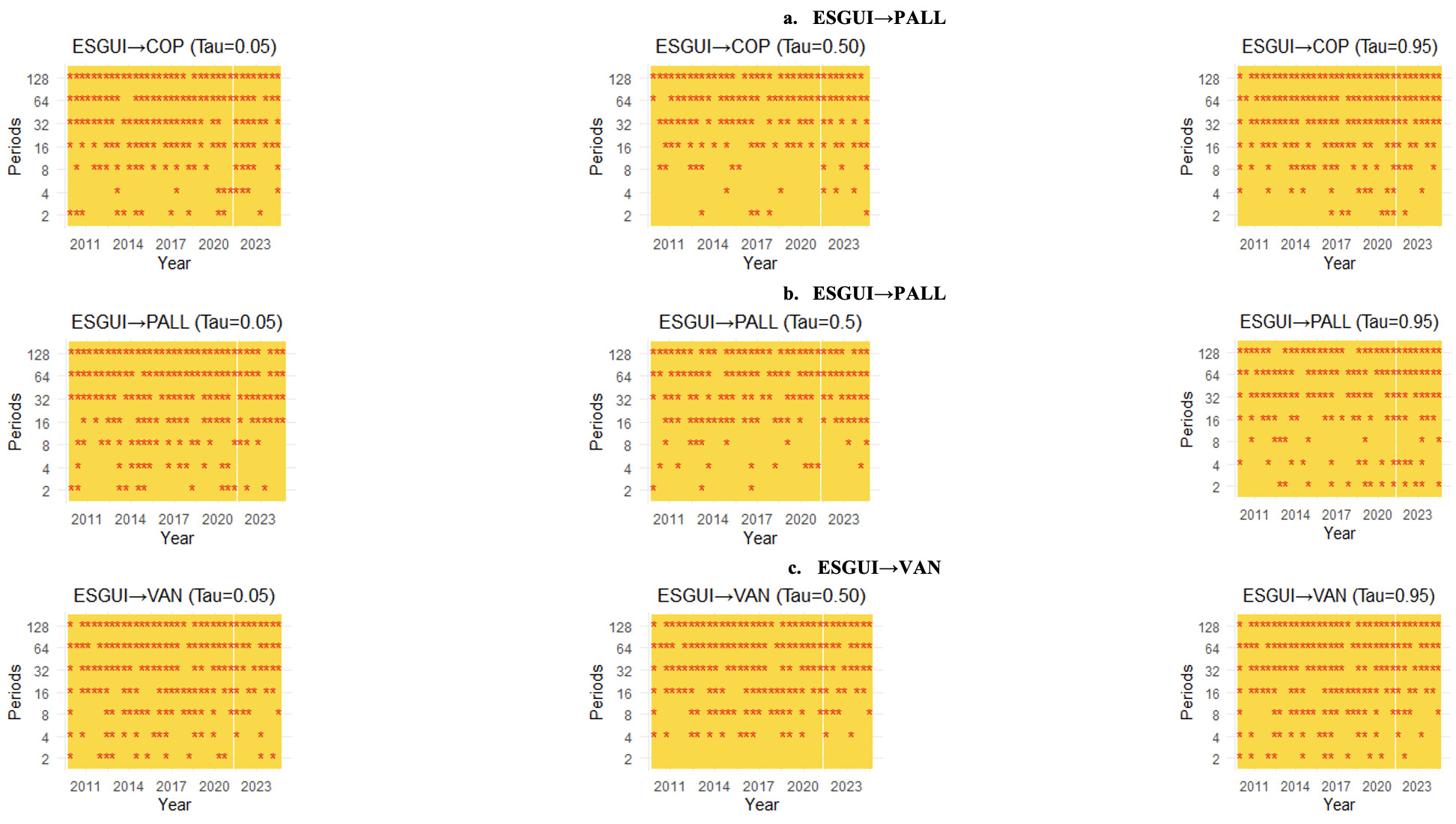
As a robustness check, we re-estimate the ESGUI–energy metals causality using a 10-month window, and the results remain consistent with the 12-month specification. Significant causality persists across metals, with strength varying by market conditions and time periods, confirming the robustness of Figure 5.
IV. Conclusion
This study examines, for the first time, how energy metals react to ESGUI. In doing so, the RWWQGC (Rolling Window Quantile Granger Causality) is employed using data from February 2009 to January 2024. The analysis shows that during bearish market conditions, the impact of ESGUI on energy metals weakens, as market participants prioritize fundamental economic factors like supply and demand over ESG risks. However, during bullish market conditions, the causal effect of ESGUI becomes stronger, with ESGUI significantly influencing metal prices, particularly at higher quantiles.
The analysis shows that ESG uncertainty significantly impacts the prices of energy metals, especially during bullish market conditions. Policymakers should integrate ESG factors into regulatory frameworks for industries relying on these metals, promoting sustainability practices and clear guidelines to manage risks. Investors should also factor ESG risk assessments into decision-making, as these factors increasingly influence market trends. During bearish market conditions, the influence of ESG uncertainty weakens, and market participants focus on supply and demand dynamics. Therefore, a balanced approach that combines ESG considerations with economic fundamentals can help stabilize markets, particularly in industries dependent on metals like vanadium.
Data Availability
Data are readily available at request from the corresponding author
Declaration of Generative AI and AI-Assisted Technologies in the Writing Process
During the preparation of this work, the author(s) utilized Grammarly to enhance the language quality and readability. The tool was used exclusively for the following purposes
Funding
The study did not receive any funding
Conflict of interest
The authors declared no conflict of interest.